
In this Areopa Academy webinar, José Miguel Azevedo, Senior Solution Architect at KPMG UK, tells the story of building a swimming pool at his family home in Porto, and connects nearly every twist of that project to patterns he has seen across more than 50 Dynamics 365 and ERP implementations. The session is moderated by Luc van Vugt. Rather than a technical deep dive, this is a project-management and soft-skills talk: viewers will come away with a set of concrete, memorable lessons about planning, scope, remote management, trust, and perspective that apply directly to Business Central implementation projects.
About José Miguel Azevedo
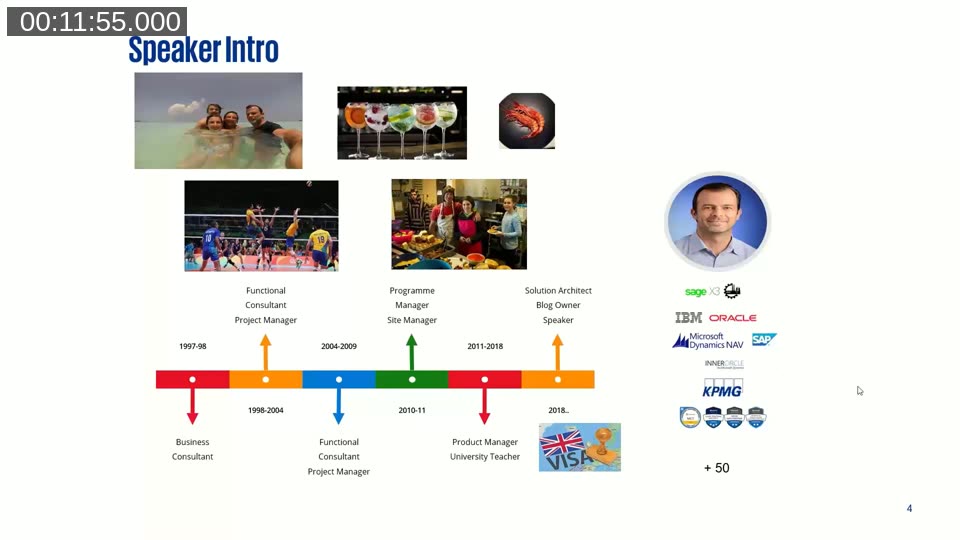
Azevedo has more than 20 years of experience in the ERP space, moving through roles as business consultant, functional consultant, project manager, programme manager, site manager, and solution architect. He has worked with Oracle, IBM, Sage, and SAP in addition to Dynamics NAV and Business Central, and has been involved end-to-end, from pre-sales through after-go-live support, in more than 50 implementations, including some of the largest and most complex Business Central deployments.
Why a swimming pool?
Azevedo explains that he chose this analogy deliberately. Building a swimming pool at his home in Porto was a major investment, more than 10% of his family’s annual revenue, and was originally expected to take about two months. As a customer rather than a consultant, he found himself in the same position his own clients are usually in: he knew what he wanted but not how to get it done technically. That gap between business intent and technical execution, he argues, is exactly the gap most Business Central customers face when they sponsor an ERP project.
Moment 1: starting without a plan
The first attempt to start the project, in March 2021, failed. Azevedo and his family approached the market without an RFP, relying on word of mouth to find a contractor. The response rate was close to zero, and the vendors who did respond said capacity was booked until the following year.
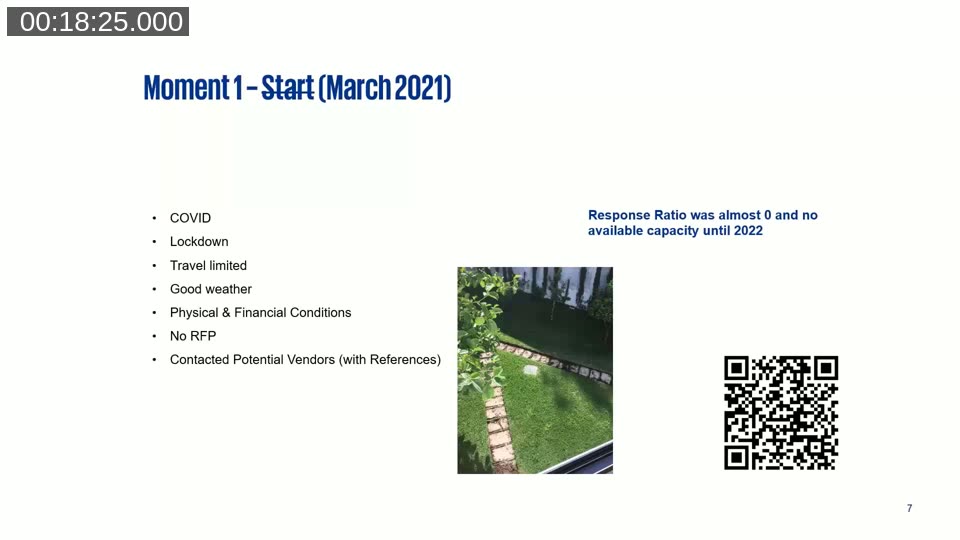
The lesson he draws is one of the most common failure points in ERP projects too: wanting a solution is not the same as having a plan for how to get one. Many customers approach a Business Central implementation with a general goal but no defined scope, budget, or timeline, and the project stalls before it starts.
Moments 2-4: a plan changes the outcome, then a good start builds momentum
A year later, the family tried again, this time bringing in an architect to design the project and produce a proper RFP. Even though a construction contract was ultimately signed only because of a chance Instagram ad (the contractor had an unexpected open slot), having a plan meant the team could move quickly and with clarity once the opportunity appeared. The first three weeks of construction went well: foundations were poured in three days, and progress over the following weeks was, in Azevedo’s words, “amazing.” He also reflects on managing the project remotely from London while living between two cities, a challenge familiar to any consultant running a project outside the client’s location.
Moment 5: management by walking around
Azevedo introduces “Managing By Walking Around” (MBWA), a practice he learned from a CEO who blocked time each week to visit the warehouse or call center with no agenda, just to ask “do you need my help?” Applying the same idea to his weekend visits to the construction site, he discovered that despite visible physical progress, there was no real planning behind it, and some of the people on site did not have the experience the work required.
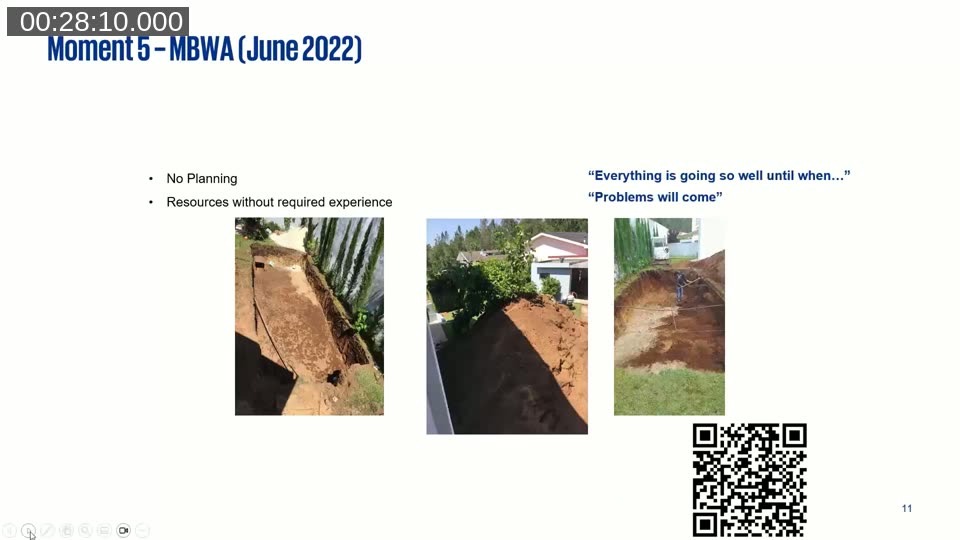
The takeaway for implementation projects: status reports and visible deliverables can look fine while the underlying planning and resourcing are not. Getting close to the work periodically, rather than relying only on scheduled status meetings, surfaces problems earlier.
Moment 6: when “nice to have” becomes the priority
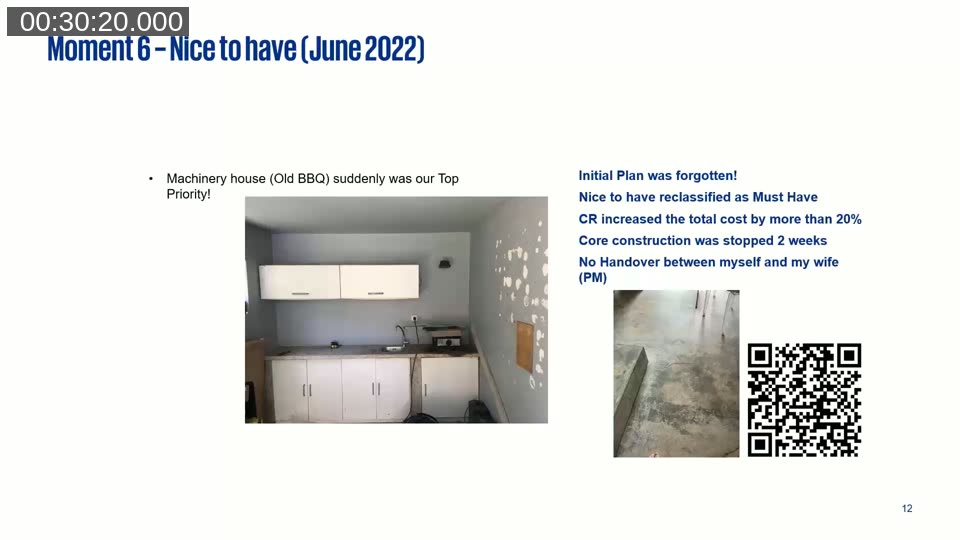
This is presented as the turning point of the story. The family decided to upgrade an old machinery/barbecue house alongside the pool. That decision increased the total project cost by more than 20% and stopped core construction for two weeks while it was resolved. Azevedo is direct about the parallel: this is scope creep, the same pattern that derails Business Central projects when a “nice to have” change request quietly gets treated as a must-have without anyone formally reassessing budget or timeline.
Moment 7: delays, lost trust, and open conflict
After the two-week pause, the construction company had already been reassigned to another project, and progress stalled through July. Azevedo describes the frustration peaking as the two sides stopped sharing the same goal: it was no longer only about finishing the pool, but about a growing lack of trust that turned into open conflict.
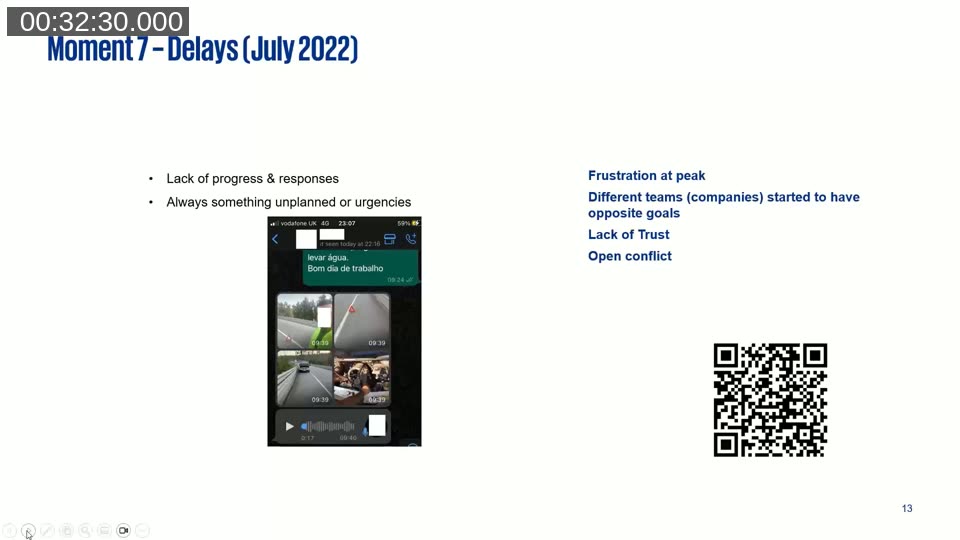
He connects this directly to implementation projects where delays erode trust between the customer and the implementation partner, and disagreements that started as scope or schedule issues escalate into relationship issues that are much harder to repair.
Moments 8-10: a rushed finish, collateral damage, and a change in perspective
The project was eventually finished in a “last sprint,” but with little attention to detail: damaged grass, cut pipes, and cosmetic faults were the price of rushing. Azevedo compares this to Business Central go-lives that technically work but leave the customer with a system nobody is happy to use.
He then shows the same swimming pool a second time, professionally photographed rather than snapped in daylight with visible flaws, calling it his “Microsoft case-study style” slide. The point is that the same outcome looks completely different depending on which details you choose to focus on, and on whose shoes you are standing in. He ties this to conversations with customers after go-live: what looks like a list of open defects to the project team can still be, to the end user, a system that lets them do their job.
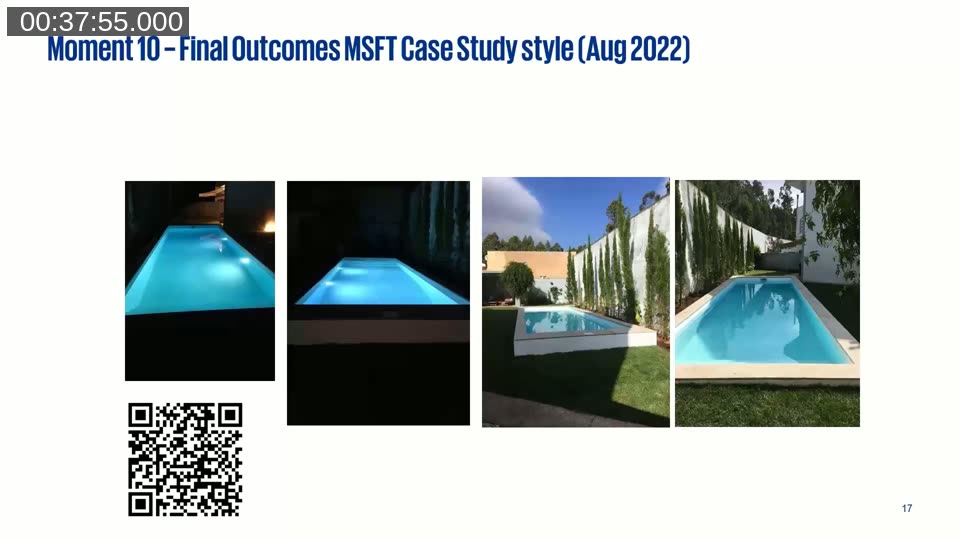
Rather than push through the remaining defects, Azevedo and the contractor agreed to pause and pick the work back up when both sides were ready, months later, with what he calls “fresh eyes.” He credits that decision, and the contractor’s consistent insistence on ending with a satisfied customer, with saving the relationship and the outcome.
The process of transition
To frame the emotional arc of the story, Azevedo references John Fisher’s Process of Transition model: a curve of stages people move through during change, from anxiety and happiness at the start, through fear, threat, guilt and depression as problems surface, toward gradual acceptance and moving forward. He first saw the diagram at a conference and found it mapped closely onto his own project.
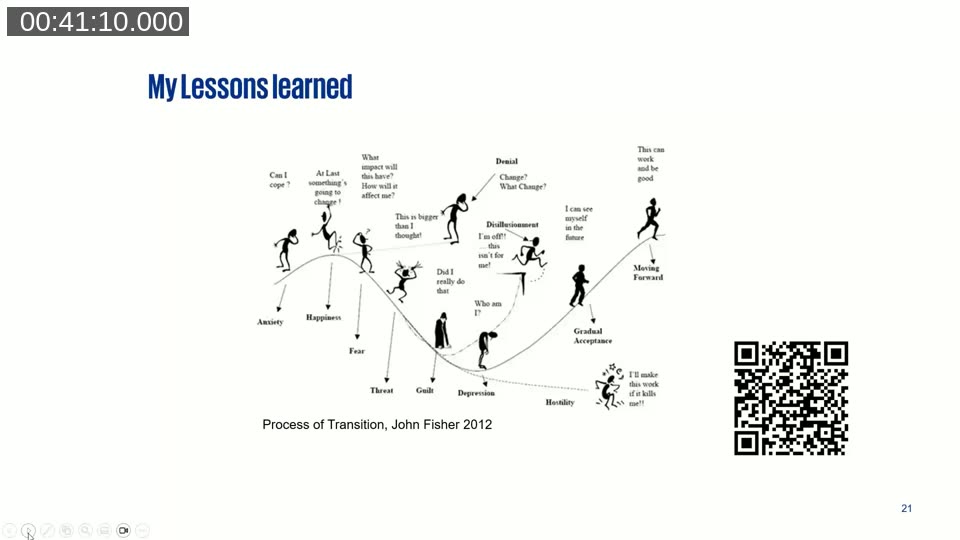
📖 Reference: John Fisher’s Personal Transition Curve (2012) — the full change-curve diagram and stage descriptions Azevedo references in the talk.
He suggests that most difficult stretches in an IT project follow a similar emotional cycle, and that recognizing which stage a team or customer is in can help a project manager respond appropriately rather than treat every low point as a project failure.
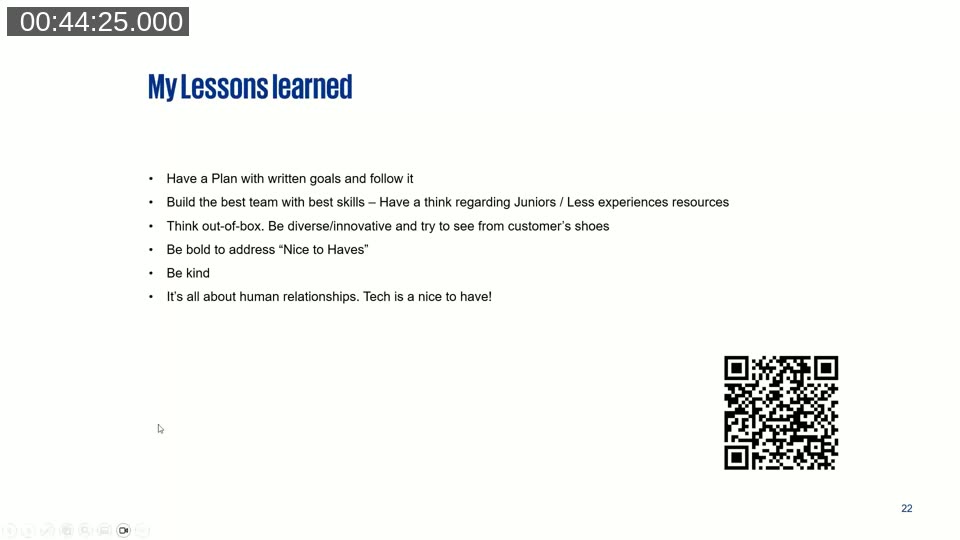
Lessons learned
Azevedo closes with a short list of takeaways that apply as much to Business Central implementations as to home renovation projects:
- Have a plan with written goals, and follow it.
- Build the best team for the job. Junior or less experienced resources are valuable, but they need to be prepared for the task rather than assumed to be ready.
- Think out of the box, bring in diverse and innovative perspectives, and try to see the project from the customer’s point of view.
- Be bold about addressing “nice to haves” before they quietly become “must haves.”
- Be kind, even in the middle of a difficult conflict; how a disagreement is handled affects the working relationship long after the issue itself is resolved.
- Technology is a nice to have. Implementations succeed or fail on human relationships and collaboration.
📖 Docs: Dynamics 365 implementation guide and its Success by Design framework — Microsoft’s methodology-agnostic phases (Discover, Initiate, Implement, Prepare, Operate) for planning and de-risking Dynamics 365 projects, addressing many of the same planning and scope-control themes raised in this session.
Q&A: on patience
During the Q&A, moderator Luc van Vugt asks whether patience was something Azevedo lacked going in, and had to learn under pressure. Azevedo agrees: customers, like his own family in this story, often push for a fixed target date (a go-live, or in this case a summer deadline) without fully weighing whether the timeline is realistic for the scope involved. He notes that the lesson he takes forward is to look at project time scales differently when he is involved as a project manager or in a steering committee, and to recognize that speed pressure from the business side needs to be balanced against what the team can realistically deliver well.
More from José Miguel Azevedo: his blog on Business Central, Power Automate, and Power Platform, or connect on LinkedIn.
This post was drafted with AI assistance based on the webinar transcript and video content.